
Stepping into Your Power when You Don’t Self Identify as a Leader
Many of us, especially women, don’t realize just how much power we hold. Even at the lowest wrung of a workplace ladder, every person still has the ability to influence others and to impact decision-making. However, if we don’t realize that and how to wield or utilize the power we do hold, how can we truly be open to seeing ourselves as leaders and later step into leadership roles? Ultimately, how do we start to self-identify as leaders when we’re nervous about what that self-identification might mean?
Leadership often shows up before we recognize it
First off, the idea of power is a tricky one. Discussing it often makes people uncomfortable and squeamish. This is especially true in mission-driven cultures, where people are often in denial of the power they hold, usually because they see themselves as “doing good” and serving others. However, if we want to consciously take on leadership roles, it is important to think about what power and leadership mean to us and what being in positions of authority and having power over others means. Otherwise we may slip into roles without fully grasping the influence, sway, and power we hold and how our leadership impacts others.
As a white American woman who is a certified racial equity training facilitator, someone who holds an MA degree in human rights, and who currently works as an Ethical Leadership Advisor & Coach, ideas like these are often on my mind. However, the following question prompted me to contemplate this in greater depth: “What if I’m not a leader, can I still receive advising and coaching support from you?” I hear this question repeatedly. Always from women and often from those in purpose-driven spaces. So I added a note to my website: You are a leader if someone listens to and values your perspective. But this question stuck in my mind and continued to roll around in there.
“What if I’m not a leader?”
Upon reflection, I realized that I myself hadn’t begun self-identifying as a leader until last year. That realization shocked me. This question of "what if I’m not a leader?” lingered in my mind because it’s deeply personal and resonates with me. I have nearly 15 years of professional experience in my field, including time spent leading global teams, and yet I would not have referred to myself as a leader prior to 2025.
Throughout our lives we’ve all been shown examples, for better or worse, of various leaders and their leadership styles, and the question of what it takes to be a “good” leader is not new. But who decides who is a leader? What defines a leader? At what point does one become a leader? If those capable of great leadership are not connecting with that title, how will they become leaders?
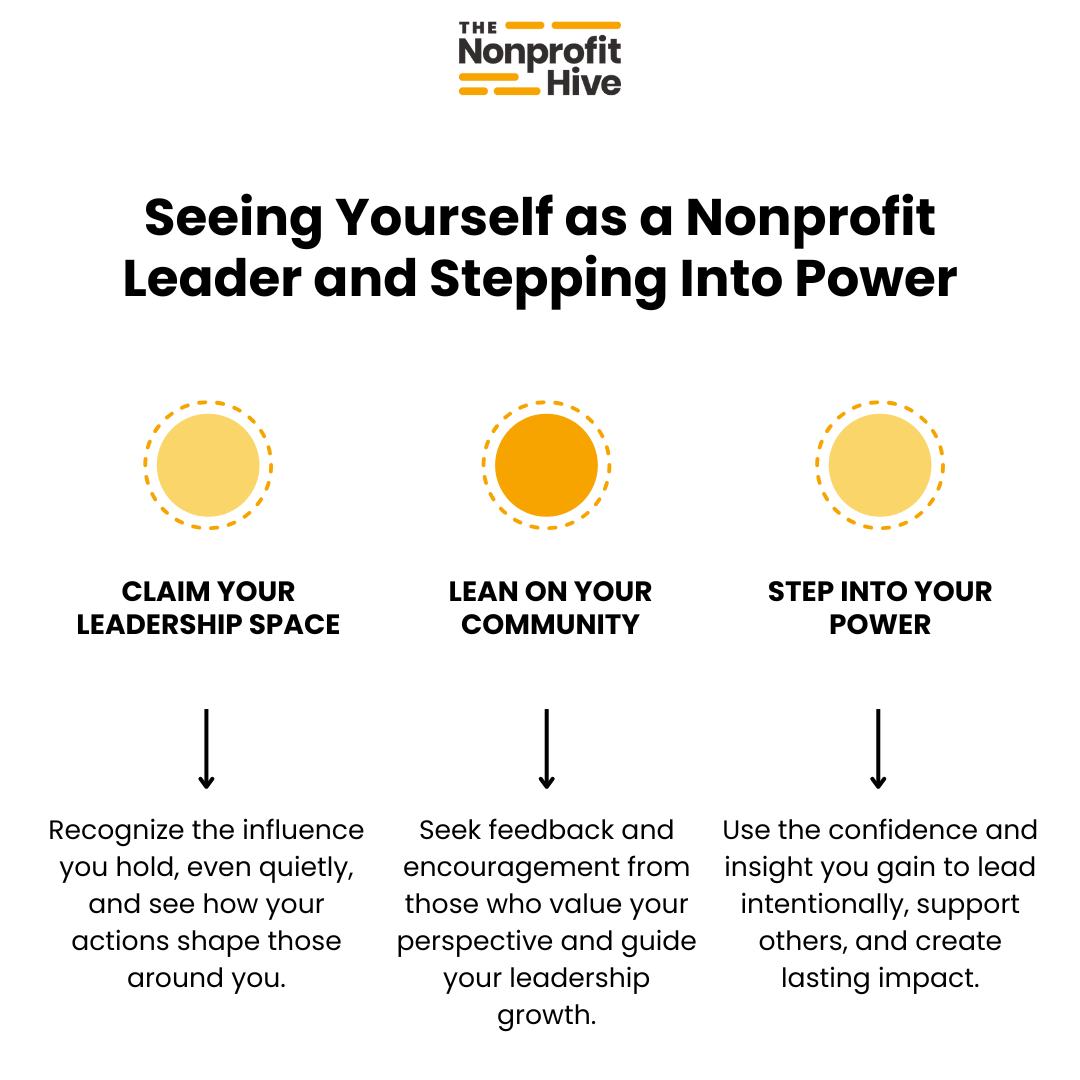
There were several factors that helped me to believe in myself as a leader, and to understand that I held more power than I originally thought. The most influential of these factors were individuals in my life whose perspectives and input I valued. They included:
Coaches I worked with;
Friends, colleagues, and supervisors who encouraged me; and
Supervisees who expressed appreciation for me supporting and guiding them.
There is a part of my brain that knows that others have seen me as a leader for much longer than the past year; however, there was always a disconnect between that knowledge and my acceptance of that status. It is worth noting that the reinforcement from those individuals carried considerable weight. Their unwavering support is what ultimately led me to see myself in that light. I had specific examples from them I could reference to remind myself that my peers and colleagues already saw me as a leader.
I’ve seen this same pattern repeated with clients, friends, and coworkers. People I view as leaders or those capable of great leadership hesitating to step into that role and claim that title. Components of that often include:
Lack of confidence;
Fear of being in the spotlight;
Plus all that comes with that, e.g. being disliked, called out, threatened, etc.; and
Belief that they don’t have enough experience or expertise.
Who decides who gets to be called a leader?
Now that I’m serving on the other side, as the advocate and champion of others, I’ve found that even minimal amounts of support and encouragement go a long way. For example: reflecting back to those individuals that their idea was well-received in a meeting; that their colleagues turn to them for their input and guidance; and that people trust and value their perspective.
For those hesitating to call themselves leaders, I invite them to consider a few questions:
When you speak up in meetings, do people listen and heed your words?
If you were to approach someone in your workplace with a concern or an idea, would they welcome it and act upon it?
Think of leaders you respect and whose leadership you’d like to emulate. What do you see in yourself that is in line with their way of leading? What could you do to bring yourself closer to that model of leadership?
Those individuals might also consider who their strongest cheerleaders are in their community or circle and ask for their honest opinion on their leadership abilities.
What do they appreciate the most about the ways in which you lead (even if those ways are subtle)?
How do they think you could improve your leadership style or lean more into your leadership capabilities?
Our communities play such an important role in building us up as leaders and in helping us to see ourselves in that light. Additionally, in a cyclical fashion, the more that we step into our power the more it allows others to do the same. Understanding the power we hold and learning how to wield it in support of others (those who don’t traditionally benefit from power in the U.S.) is essential to building the society and communities we desire and envision. When I finally stepped into my power, I realized just how much I was capable of, the amount of influence I already held, and the kind of leader I was readily becoming.
*Written for The Nonprofit Hive - view full article here.